Fault Finding & Diagnosis
Vehicle Electrical Diagnostics in Blackburn
Electrical faults can be frustrating. We help drivers across Blackburn get to the bottom of what’s actually going wrong — whether that’s a warning light, an intermittent cut-out, a sensor problem or a charging-system issue. No guesswork, just proper testing to narrow it down.
What Electrical Fault Finding Involves
Modern vehicles rely on complex electrical systems — dozens of connected modules, sensors and wiring looms all working together. When something goes wrong, the symptom you notice — a warning light, a non-start, a flat battery — rarely tells the whole story on its own.
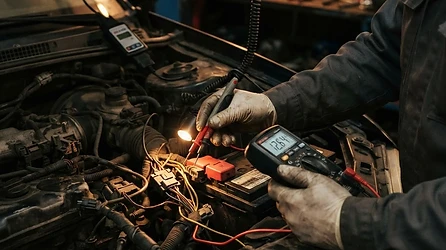
Proper fault finding follows a methodical process: understand the symptom, test the relevant circuits, check live data where available, and narrow down the cause before recommending any repair. It takes longer than just plugging in a code reader, but it’s far more likely to find the real issue.
Warning Lights — What They Actually Mean
A warning light on the dashboard is the vehicle telling you something is outside its expected range. But the same light can have several possible causes. A battery warning light could mean an alternator fault, a wiring issue, a failed sensor or a genuine charging-system failure.
We’ll diagnose what the warning actually means for your specific vehicle, rather than assuming the most common cause.
Intermittent Faults
Intermittent faults are among the trickiest electrical problems to trace. The vehicle works one day and fails the next, or the fault only shows up under certain conditions — cold mornings, damp weather, after a long run.
These faults often point to a failing component, a poor connection or damaged wiring that loses contact under vibration or temperature change. We use testing and the symptom pattern to track it down, though intermittent faults can sometimes take more than one visit to confirm.
Sensor and Wiring Problems
Sensors and their wiring are a frequent source of electrical faults. A corroded connector, a chafed wire or a sensor drifting out of range can cause starting issues, poor running, warning lights or failed systems.
We test sensors and their circuits rather than just replacing parts on suspicion. This avoids unnecessary component swaps and helps find the actual failure point.
Battery and Charging-System Testing
The battery and charging system sit underneath almost every electrical function on the vehicle. If the voltage is low or unstable, seemingly unrelated systems can start behaving oddly. We test battery condition, charging output and parasitic drain as part of a thorough diagnosis.
Diagnostic Equipment
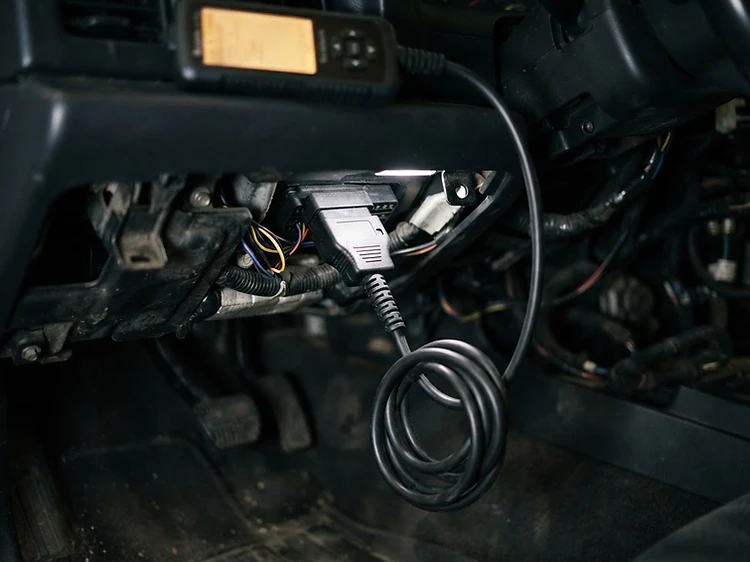
We use diagnostic equipment to read fault codes, view live data and test components. It helps narrow down where the fault is — but it’s a tool, not a substitute for methodical testing and experience.
Why a Fault Code Alone Doesn’t Always Find the Real Cause
A fault code points to a circuit or system that the vehicle has flagged as running outside its expected parameters. It doesn’t necessarily tell you which part has failed. A code for a particular sensor could mean the sensor itself has gone, but it could equally mean the wiring to it is damaged, the connector is corroded, or another component is causing the reading to drift.
This is why we don’t just read a code and order a part. We test the circuit, check the wiring and confirm the cause before recommending a repair. It costs less in the long run because it avoids replacing parts that weren’t the problem.
Related Services
Related Electrical Faults
Electrical faults often overlap. These related pages might also be relevant to your vehicle.
Car Won’t Start
Help finding the cause when the car won’t start — battery, starter, charging, wiring or immobiliser.
Battery & Charging
Finding why the battery keeps going flat — parasitic drain, charging faults and poor connections.
Wiring Repairs
Tracing and repairing damaged wiring, corroded connections, fuses, relays and lighting faults.
Warning Lights
Working out what dashboard warnings, ABS, airbag, parking sensor and sensor faults actually mean.
Related Guides
Plain-English Guides
Short, practical guides that go deeper on related faults.
FAQ
Frequently Asked Questions
Yes, we can read fault codes at the vehicle using diagnostic equipment. But fault codes are a starting point, not a definitive answer. We’ll test the relevant circuits and wiring to confirm the actual cause before recommending any repair.
No. Some warning lights relate to systems that need further testing or equipment that isn’t practical at the roadside. We can look at many faults on location, but some may need workshop facilities or further investigation.
It depends on the fault. Some issues are spotted quickly; others — particularly intermittent faults — may take longer or need more than one visit to confirm. We’ll explain what’s involved once we understand the symptoms.
Tell us about the fault and we’ll explain what’s involved, including any costs, before attending. Diagnosis is a professional service and the cost depends on how complex the fault is.