Wiring & Connections
Car Wiring Repairs in Blackburn
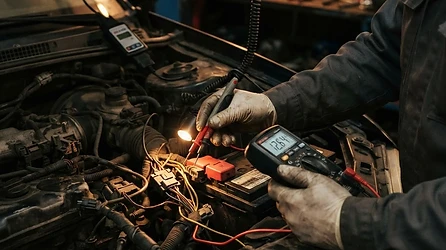
Wiring faults can cause some of the most frustrating electrical problems — intermittent cut-outs, systems that work one day and fail the next, or accessories that behave erratically. We help drivers across Blackburn trace and repair damaged wiring, corroded connections and related issues.
Damaged Wiring
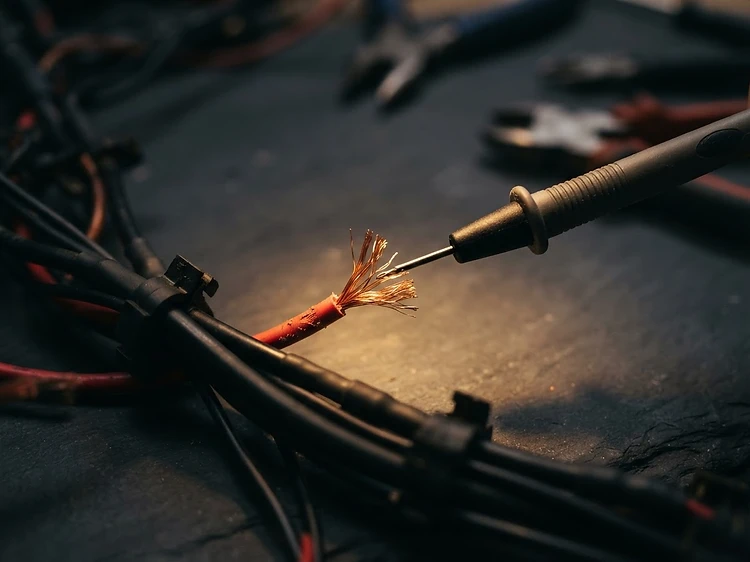
Vehicle wiring can be damaged in several ways — chafing against metal edges, heat damage from being close to hot components, rodent damage, or impact damage from previous repairs or accidents. Damaged wiring can cause short circuits, open circuits or intermittent faults that are hard to trace without methodical testing.
We locate damaged sections by testing circuits and tracing the wiring loom to find where continuity is lost or where a short to ground or power exists.
Corroded Connections
Corrosion at electrical connectors is a common cause of faults, particularly in older vehicles or those used in wet conditions. Corroded pins and terminals create high-resistance connections that cause voltage drops, intermittent operation and complete failures.
We inspect connectors for corrosion, test pin fitment and measure voltage drop across connections to find where the resistance is building up.
Previous Accessory Installations
Wiring from previously fitted accessories — old stereo installations, towbar wiring, alarm systems, dash cams — can be a source of faults. Poorly installed or partially removed wiring can create short circuits, parasitic drains and interference with the vehicle’s original systems.
If an accessory was fitted or removed around the time the fault appeared, it’s worth mentioning. Tracing aftermarket wiring is often the key to sorting these issues out.
Intermittent Electrical Faults
Intermittent faults — where a system works sometimes and fails at other times — are frequently caused by wiring or connection issues. A wire that makes contact when cold but separates when warm, a connector that loses connection under vibration, or a connection that fails in damp conditions.
These faults need patience and methodical testing. We use the symptom pattern to guide where to test, and may need to reproduce the conditions the fault happens under.
Fuses and Relays
Blown fuses and faulty relays can cause individual systems or groups of systems to stop working. A fuse that has blown is usually a sign of a fault elsewhere — a short circuit or an overloaded circuit — rather than a problem with the fuse itself. Just replacing a blown fuse without finding the cause will often mean it blows again.
We find out why a fuse has blown or a relay has failed, rather than just swapping it.
Lighting and Sensor Wiring
Wiring to exterior lights, sensors and switches is exposed to the elements and is a common source of faults. Headlights, indicators, brake lights, reverse lights, parking sensors and other exterior systems can all fail due to wiring issues rather than the component itself.
We test the wiring to the affected component before recommending replacement.
Proper, Methodical Fault Finding
Wiring repair needs a methodical approach — testing circuits at the right points, tracing wiring through the loom, and confirming the fault location before cutting into wiring or replacing sections. We don’t guess at wiring faults. We test, confirm and then repair.
All wiring repairs are carried out safely, with proper connections and insulation. We don’t use quick fixes or temporary bypasses that could store up problems for later.
Related Services
Related Electrical Faults
Electrical faults often overlap. These related pages might also be relevant to your vehicle.
Mobile Auto Electrician
We come to your home, workplace or wherever the vehicle is parked for mobile electrical diagnosis.
Electrical Diagnostics
Proper fault finding for warning lights, intermittent issues and sensor problems.
Battery & Charging
Finding why the battery keeps going flat — parasitic drain, charging faults and poor connections.
Warning Lights
Working out what dashboard warnings, ABS, airbag, parking sensor and sensor faults actually mean.
FAQ
Frequently Asked Questions
Many wiring repairs can be done at the vehicle location, depending on how bad the damage is and what access is available. Some wiring repairs — particularly those needing extensive loom work — may need more time or shelter. We’ll explain what’s involved after diagnosing the fault.
It could be. Flickering lights can be caused by poor connections, damaged wiring, a faulty switch or a charging-system issue. We test the wiring and connections to the affected lights to find whether the fault is in the wiring or elsewhere.
Yes. A fuse that blows repeatedly is usually a sign of a fault elsewhere in the circuit — a short circuit or an overloaded component. We trace the circuit to find what’s causing the excess current draw, rather than just replacing the fuse.
It could well be. Aftermarket installations are a common source of wiring faults — poor connections, incorrect wiring, or interference with the vehicle’s original systems. Tell us what was fitted and when, and we can look into whether it’s connected to the fault.