Knowledge Base
A Guide to Auto-Electrical Fault Diagnosis
Modern vehicles rely on electrical and electronic systems for almost every function — starting the engine, charging the battery, managing warning lights, sensors and lighting. When something goes wrong, the symptom you notice is rarely the whole story. This guide explains what diagnosis involves and why finding the underlying cause matters before any part is replaced.
What auto-electrical diagnosis involves
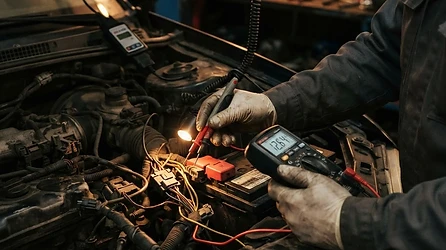
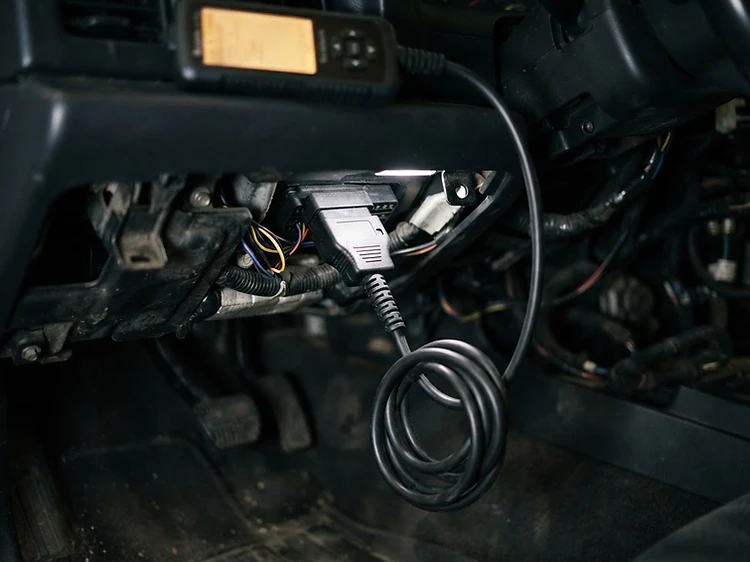
Diagnosis is the process of tracing a symptom back to its cause. It typically includes checking the battery condition and charging voltage, testing wiring and connections for continuity and corrosion, inspecting fuses and relays, reading diagnostic information from the vehicle and comparing live readings against the values the manufacturer expects. The exact steps depend on the vehicle, the fault and the symptoms described, so a methodical approach matters — it avoids guessing and helps confirm what’s actually wrong before any work is carried out.
A single symptom can have several possible causes. A flat battery, for example, could be an ageing battery, a charging-system fault, a poor connection or an electrical accessory drawing power while the vehicle is parked. Testing each possibility in turn is what turns a symptom into a diagnosis.
Why a fault code is not a diagnosis
Many drivers assume a diagnostic fault code identifies the failed part. In reality, a code points to a circuit or system the vehicle has flagged as operating outside its expected parameters. A code for a particular sensor could mean the sensor itself has failed, but it could equally mean damaged wiring, a corroded connector, or another component causing the reading to go out of range.
This is why testing the circuit and confirming the cause before replacing parts matters. Swapping components based on a code alone often leads to unnecessary expense when the real fault is in the wiring or a connection further along the line.
Common fault categories
The faults drivers come across most often fall into a handful of categories. Each can have several possible causes, which is exactly why testing is needed rather than assumption:
- Non-starting vehicles — weak battery, starter motor, immobiliser or cranking faults.
- Battery drain and charging faults — parasitic drain, ageing battery or alternator undercharging.
- Alternator and starter motor faults — charging output, cranking speed and circuit testing.
- Wiring faults — damaged, corroded or poorly connected wiring and earth points.
- Warning lights and sensor faults — dashboard warnings tied to sensors, wiring or control modules.
What to expect from a mobile visit
After you describe the vehicle and the fault, the next step is usually an assessment at the vehicle’s location. Some faults can be diagnosed and repaired there; others may need replacement parts, further testing or workshop facilities. The aim is to explain the likely next step clearly, in plain language, before any work begins — so you know what’s being done and why.
Giving us the vehicle make, model, year and registration, a clear description of the symptoms, details of any warning lights and whether the problem is constant or intermittent all help make the assessment more useful.